
表示
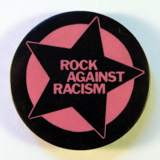
Rock Against Racism
The Rock Against Racism movement was founded in England in the late 1970s by a group of musicians and political activists. At that time there had been an increase in racial violence and xenophobia which was fuelled by the rise of the National Front, a neo-Nazi political party. But the immediate spur for the formation of the movement was a speech given by Eric Clapton, a famous rock guitarist and performer, at a concert in Birmingham in August 1976. At the concert Clapton had announced his support for Enoch Powell, a controversial British MP who was strongly opposed to immigration and whose speeches had stirred up racist feelings and attacks against black Britons. Ironically, Clapton had recently had a world-wide No. 1 hit with the song ‘I Shot the Sheriff’, first written and recorded by Jamaican reggae legend Bob Marley.
In a show of multicultural solidarity, musicians from all across the country came together for Rock Against Racism concerts and events. Mass popular protests were organized under the slogan: “Reggae, soul, rock ‘n’ roll, jazz, funk, punk – OUR MUSIC”. A notable Rock Against Racism event from this time was the “Carnival against the Nazis” rally held in April 1978. Over 100,000 people marched from Trafalgar Square through London’s East End – the heart of National Front territory – to a concert in Victoria Park, Hackney.
One of the most influential of the Rock Against Racism musicians was Jerry Dammers. Dammers’ band was The Specials, also known as Special AKA, a ska band comprising black and white musicians. In 1979 Dammers established a new record label called 2 Tone Records to release the band’s songs and albums, and he also signed up many other popular bands and musicians.
For the new label Dammers created a distinctive logo which featured a drawing of a young man named “Walt Jabsco” who was dressed in typical “rude boy” style: black suit, white shirt, black tie, pork pie hat, white socks, and black shoes. Also featured on record sleeves and covers was a black-and-white checkered design, with the two tones tightly woven together and equally distributed. The logo and design were symbols of racial unity, and they captured perfectly the multi-racial mix of the musicians on stage and the fans dancing together in the crowd.