By Ari Zebersky
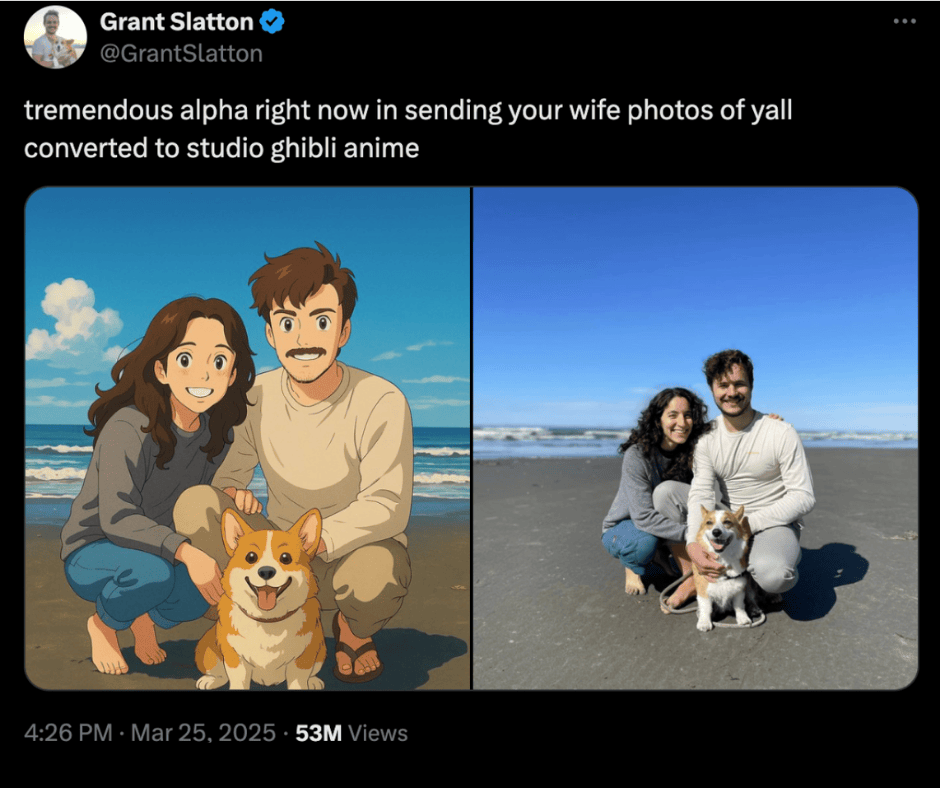
On March 25, 2025, Grant Slatton tweeted “tremendous alpha right now in sending your wife photos of yall converted to studio ghibli anime” and suddenly, Studio Ghibli–inspired images flooded timelines everywhere.
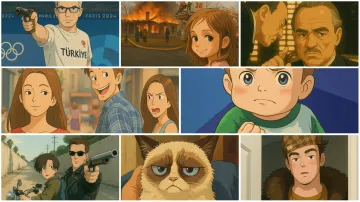
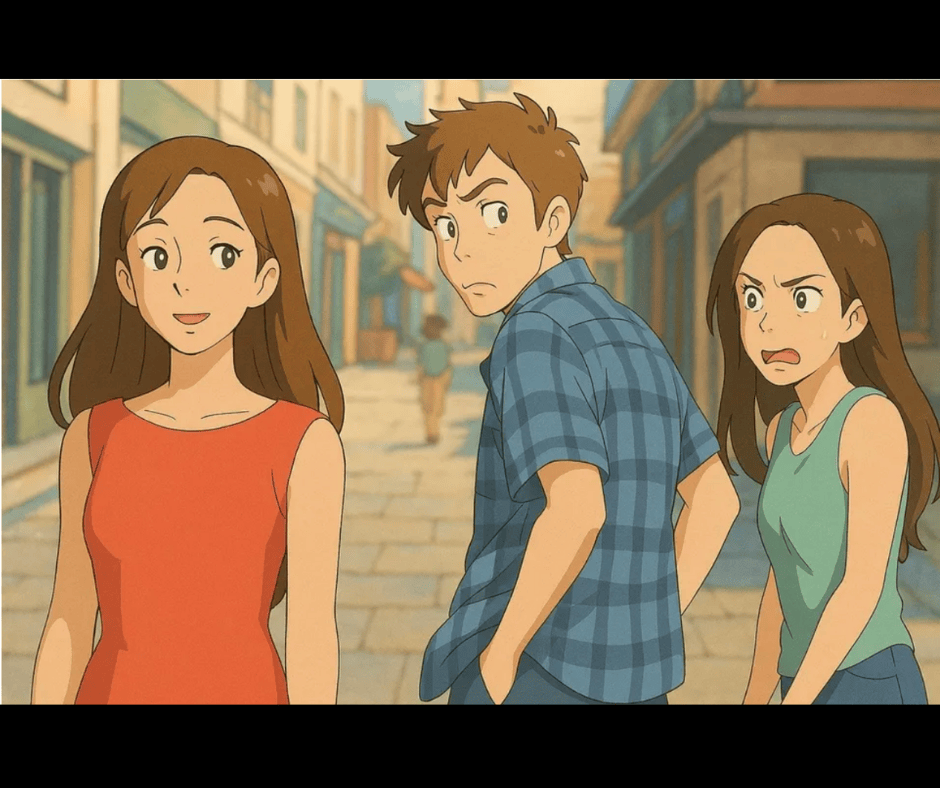
Family photos reimagined in soft watercolor palettes, memes rendered with gentle expressions, and iconic moments in pop culture transformed into scenes that felt like they belonged beside Spirited Away or My Neighbor Totoro.
For decades, the studio has represented something rare in modern media: quiet reflection, heartwarming moments, and rich storytelling. To “Ghibli-fy” an image wasn’t about trend hopping; it was an act of belonging.
“The GPUs Are Melting”
Across ChatGPT, Midjourney, and other image-generation tools, users generated over 700 million Ghibli-style images. To put it in perspective, the entire Studio Ghibli catalog is made up of approximately 3,456,000 frames across 24 films.
The surge was so extreme that OpenAI CEO Sam Altman publicly remarked that their “GPUs are melting,” prompting temporary rate limits on image generation. The message was received: users don’t just want generative images; they want immersion in known, familiar universes with decades of brand meaning behind them.
Gen AI can generate in seconds, but what makes people share their images is the desire to belong and connect – and here, it was Studio Ghibli’s 40 years of IP building that prompted a global wave. However, when viral demand hits something recognizable without rights-holder participation, platforms take on recurring brand, legal, and reputational risk and IP holders must manage against copyright infringement.
Separating the Art from the Artist
While creating Ghibli-style images brought joy to millions, it also surfaced a harder truth. The platforms enabling this creativity did not own the rights to the source material and the artists who shaped the Ghibli aesthetic were never credited, compensated, or consulted.
In turn, LLMs made the general public complicit in the unfair extraction of value from Studio Ghibli and its artists. They inadvertently made pirates of us all.
Even if “style” itself exists in a legal gray zone, artistry does not. When millions of outputs converge on a singular, identifiable creative legacy, the absence of permission becomes impossible to ignore. What looks like harmless fandom at small scale starts to resemble extraction at platform scale.
Case in point: the growing list of lawsuits filed against AI companies for copyright infringement.
The Myth of the Trade-Off
Too often, the industry responds by framing a false binary: protect intellectual property or enable creative AI. For LLM platforms, moments like the Studio Ghibli trend function as stress tests.
They expose growing legal risk, as rights holders seek clarity and precedent. They invite regulatory scrutiny, as policymakers confront systems that scale faster than existing IP frameworks. And they create brand risk, particularly among creators who increasingly view generative AI with suspicion rather than curiosity.
But the republic of consumers have already voted: they want generative tools that feel culturally grounded and emotionally resonant. Creators, meanwhile, want recognition, participation, and compensation. What’s missing isn’t demand or a willingness to coexist. It’s the infrastructure to support both the tools and the creators.
Building the Bridge
To meet this moment, generative AI needs an enablement layer that connects creativity with consent.
This is the problem space Negosh is addressing: building infrastructure that connects LLMs with licensors, manages and stores “smart assets,” and establishes guardrails for proper IP use. Rather than blocking prompts or retroactively policing outputs, this layer makes licensing, attribution, and monetization part of the system itself.
In this model:
- LLMs can identify when a prompt references a protected style or universe
- Demand signals can be captured and surfaced to rights holders
- Licensors can define terms, pricing, and usage permissions
- Attribution and revenue sharing can happen automatically
Viral moments no longer trigger emergency rate limits or legal panic. They become opportunities that can be structured, measurable, and monetized.
What the Studio Ghibli Moment Really Taught Us
It showed how deeply people want to participate in beloved creative worlds, ones that have been built over decades through film, music, and books. It demonstrated the cultural power of generative tools at scale. And it exposed the cost and risk of operating without a bridge between innovation and intellectual property.
The next era of generative AI will belong to platforms that can honor that legacy while scaling responsibly — where artists are credited, IP is licensed, and fans can create without guilt or gray zones. Negosh will be leading that era and we invite you to join our beta.